
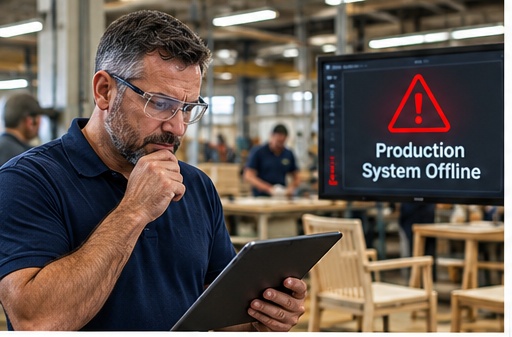
Furniture manufacturers depend on technology far beyond the front office.
ERP systems, production scheduling, engineering files, inventory, purchasing, shipping, Microsoft 365, vendor connections, and plant-floor systems all contribute to keeping orders moving.
That makes cybersecurity assumptions especially dangerous.
One of the most common is:
“We’re not big enough to be an attractive target.”
Cybercriminals are not always looking for the biggest company. They are looking for opportunity.
An exposed account, weak password, outdated system, poorly secured remote-access connection, or unmonitored user account can be enough to create an opening.
For a furniture manufacturer, the real question is not whether your company is large enough to attract attention.
It is whether an attacker can find a way into the systems your operation depends on.
Another common assumption is:
“Our employees will recognize a phishing email.”
That is becoming harder every year.
Phishing emails can now look like legitimate requests from executives, vendors, banks, Microsoft 365, freight companies, customers, or suppliers.
AI is making them more polished and convincing.
A message asking someone to change payment information, open a document, reset a password, or use a new login link may look completely normal.
That creates a particular challenge in manufacturing because employees are often moving quickly.
Purchasing needs material.
Accounting needs to pay a vendor.
Operations needs an answer.
Shipping needs information now.
Urgency is exactly what attackers exploit.
There is another assumption worth challenging:
“We have MFA, so our accounts are protected.”
Multi-factor authentication is important, but it should not create a false sense of security.
Employees can still be tricked into approving fraudulent login requests. Accounts can still be compromised through session theft, weak recovery processes, social engineering, or poorly secured devices.
MFA works best as one layer in a broader security strategy.
Furniture manufacturers should regularly ask:
- Are former employee accounts still active?
- Who has administrative access?
- Is remote access still necessary for everyone who has it?
- Are vendors using secure access methods?
- Are employees trained to recognize unusual requests?
- Are critical systems monitored for suspicious activity?
- Are old or unsupported systems still connected to the network?
Cybersecurity does not require assuming the worst.
It requires knowing where your real risks are.
For manufacturers with internal IT teams, this is where co-managed cybersecurity can help.
Your IT team already understands your users, ERP environment, production systems, vendors, and business priorities.
The right outside partner adds specialized cybersecurity expertise, broader visibility, monitoring, and additional support without replacing the people who already know your business.
The goal is simple: find the gaps before someone else does.

