
It’s March.
Your accounting team is buried.
Invoices are stacking up.
Vendors are requesting updates.
Year-end numbers are closing.
Tax documents are moving fast across email.
Inside most furniture manufacturing companies, finance teams are simply trying to keep operations moving while meeting deadlines.
Everyone’s focused on getting through the month.
Unfortunately, your accounting department isn’t the only one who knows this.
Cybercriminals do too.
Why Tax Season Is Prime Time for Manufacturing Cyberattacks
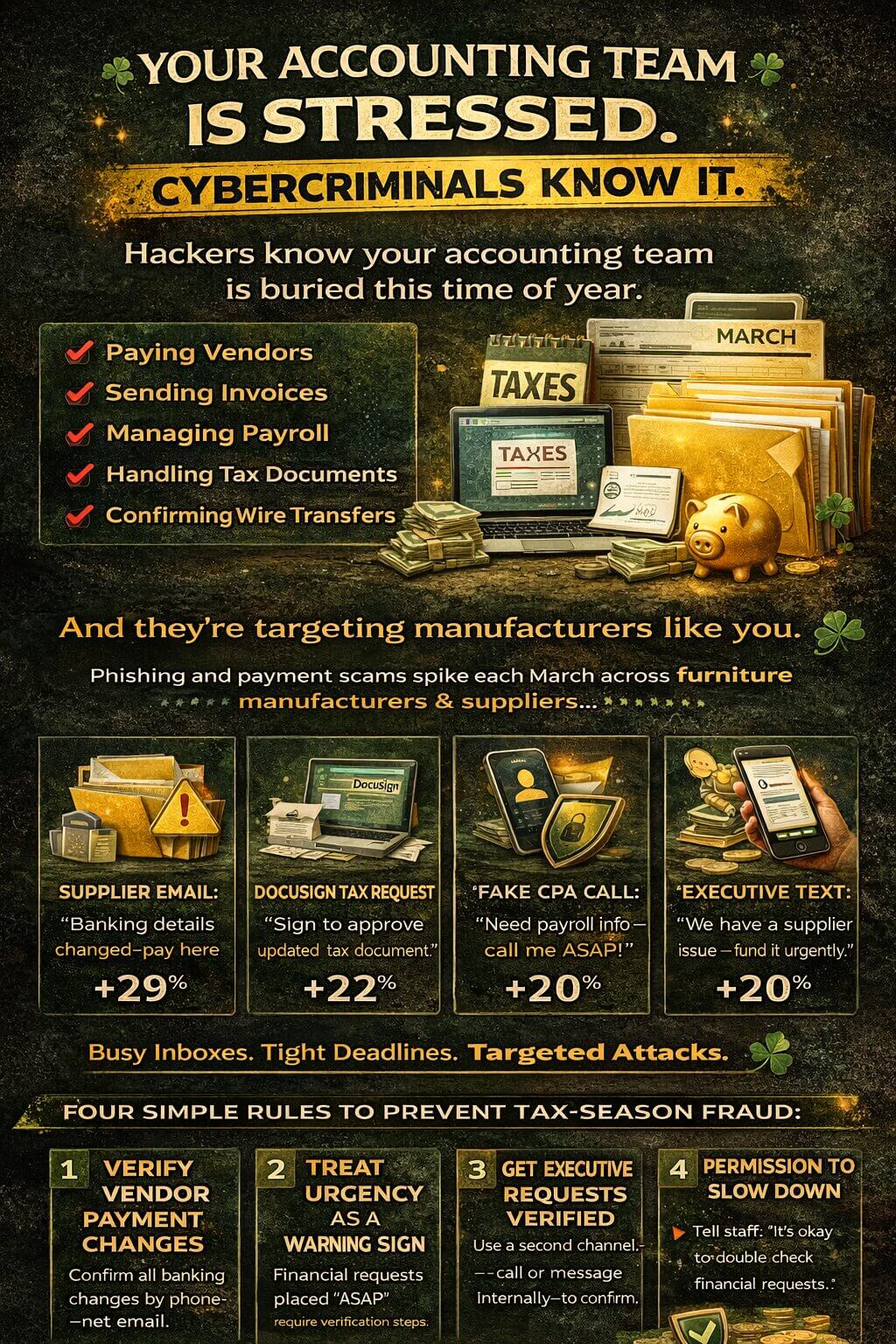
Security researchers consistently see a sharp increase in phishing and payment-fraud attacks during tax season.
And manufacturers are increasingly targeted.
Why?
Because manufacturing finance teams handle:
- vendor payments
- wire transfers
- supplier invoices
- payroll data
- tax documentation
- banking changes
Attackers don’t need sophisticated hacking tools.
They just need one busy employee moving too fast.
The Real Target Isn’t Your Accountant
Most leaders assume attacks target accounting firms.
In reality, attackers target the stress surrounding them.
During tax season:
- Financial documents move quickly
- Normal verification steps get skipped
- Urgent requests feel routine
- Staff prioritize speed over validation
The entire business ecosystem accelerates.
And speed creates opportunity.
Hackers don’t attack calm organizations.
They attack busy ones.
March is busy.
What These Attacks Actually Look Like in Manufacturing
These aren’t obvious scams.
They look exactly like normal business activity:
- A supplier emails saying banking details changed
- “Your CPA” requests updated payroll information
- A DocuSign tax document needs immediate approval
- An executive traveling asks accounting for urgent help
- A vendor requests payment confirmation before shipment
Nothing looks unusual.
That’s why companies fall for them.
Why Smart Teams Still Get Caught
These incidents rarely happen because someone is careless.
They happen because people are human.
When inboxes are overloaded and deadlines are tight, employees:
- skim instead of verify
- assume familiarity
- respond quickly to urgency
Attackers design emails specifically for these moments.
They don’t need recklessness.
They just need pressure.
Four Simple Ways Furniture Manufacturers Can Avoid Becoming the Easy Target
1. Verify Vendor Payment Changes by Phone
Never approve banking or payment updates through email alone.
Always confirm using a trusted phone number already on file.
This single habit prevents some of the most expensive manufacturing fraud incidents.
2. Treat Urgency as a Warning Sign
Requests involving:
- W-2s
- tax records
- payroll files
- financial data
should trigger verification — not speed.
Real partners tolerate verification.
Scammers rely on urgency.
3. Confirm Executive Requests Through a Second Channel
Many attacks impersonate traveling executives.
Before acting:
✔ Call
✔ Text
✔ Message internally
Two minutes of confirmation can prevent six-figure losses.
4. Give Your Team Permission to Slow Down
One of the most effective controls costs nothing:
Tell your accounting and operations staff:
“It’s okay to double-check financial requests.”
That cultural permission dramatically reduces fraud risk.
Why This Matters More for Furniture Manufacturers
In manufacturing, financial fraud doesn’t stop at accounting.
It can quickly impact:
- supplier relationships
- material deliveries
- shipment schedules
- production timelines
A fraudulent payment or compromised account can ripple directly into operations.
Cybersecurity today isn’t just IT protection.
It’s business continuity protection.
The Takeaway
Tax season attacks aren’t especially sophisticated.
They’re simply well-timed.
They rely on:
- stress
- assumptions
- speed
You don’t need massive technology changes to reduce risk.
You just need intentional verification during busy seasons.
Sometimes slowing down is the fastest way to stay operational.
A Quick Busy-Season Reality Check
If tax season tends to push your organization into reactive mode, it may be worth validating how financial and operational requests are protected.
We regularly help furniture manufacturers and suppliers review:
- payment-fraud exposure
- executive impersonation risk
- accounting workflow security
- cyber-insurance alignment
- co-managed cybersecurity controls
No scare tactics.
No disruption to operations.
Just clarity.

