
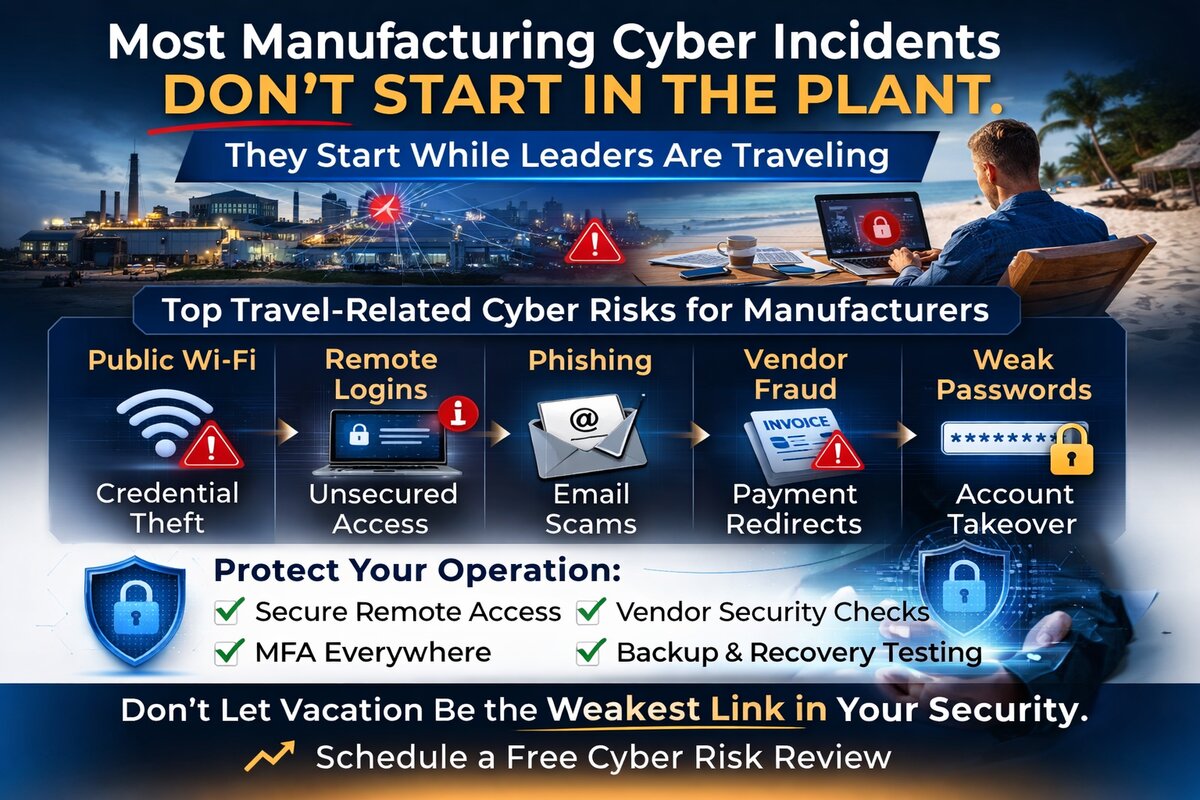
How Travel Tech Mistakes Can Lead to Production Downtime and Cyber-Insurance Issues
When leadership teams step away for spring break, production rarely stops.
Orders still move. Vendors still communicate. Systems remain connected.
And increasingly, cybercriminals take advantage of exactly this moment.
Furniture manufacturers and their suppliers have become prime ransomware targets—not because they lack IT teams, but because manufacturing environments depend on continuous operations.
A single compromised login while traveling can disrupt scheduling systems, purchasing platforms, or production workflows.
Here are the most common travel-related cybersecurity risks affecting furniture manufacturers — and how to prevent them.
Why Manufacturers Are Targeted During Travel Periods
Cyber attackers understand manufacturing pressure.
If production stops:
- shipments are delayed
- labor sits idle
- customer relationships suffer
- revenue loss happens immediately
That urgency makes manufacturers more likely to pay ransomware demands.
Executive travel creates temporary security gaps attackers actively exploit.
1. Public Wi-Fi and Remote Access Risks
Checking ERP systems or approving orders over hotel or airport Wi-Fi may seem harmless.
However, attackers frequently deploy fake wireless networks designed to capture credentials.
Manufacturing Impact
Compromised credentials can expose:
- ERP systems
- supplier portals
- purchasing approvals
- financial systems
Best Practice
Use secured mobile hotspots or company-approved VPN access for all business activity.
2. Quick Logins Outside Secure Networks
Many breaches begin with executives accessing systems while traveling.
One quick login often becomes:
- email access
- accounting approval
- remote desktop sessions
- cloud platform authentication
Each login increases exposure.
If production does not immediately depend on it, delay access until secure connectivity is available.
3. Unsafe Streaming and Downloads
Searching for unofficial sports streams or downloading unfamiliar apps introduces malware risks.
When infected devices reconnect to company networks, attackers gain entry points.
Manufacturing ransomware incidents frequently originate from compromised endpoints.
4. Shared Devices and Credential Exposure
Allowing family members to use work-connected devices can unintentionally approve risky permissions or downloads.
Executive mobile devices often contain:
- authentication apps
- saved credentials
- business email access
Separating personal and business devices significantly reduces risk.
5. Social Media Oversharing
Posting travel updates in real time signals reduced oversight inside an organization.
Attackers use this information to launch:
- invoice fraud attempts
- executive impersonation scams
- vendor payment redirection attacks
Posting after returning home is safer.
6. Public Charging Station Threats
Compromised USB charging ports can access device data while charging.
Use personal chargers or portable batteries instead.
Cybersecurity and Cyber-Insurance Reality for Manufacturers
Cyber-insurance carriers increasingly require proof of:
- Multifactor authentication
- Secure remote access
- Tested backups
- Employee security awareness
- Documented security controls
Travel-related credential compromise is now a common factor reviewed during claim investigations.
Security failures during executive travel can directly impact claim approval.
The Bottom Line for Furniture Manufacturers
Cybersecurity incidents rarely begin with dramatic hacking events.
They begin with normal behavior:
- rushing
- multitasking
- staying connected while away
Preventing small exposure points protects production continuity.
Need a Second Opinion?
Many furniture manufacturers operate in co-managed IT environments where internal teams handle daily operations while external specialists validate security posture.
A short cybersecurity review can identify:
- remote access risks
- executive travel exposure
- cyber-insurance alignment gaps

